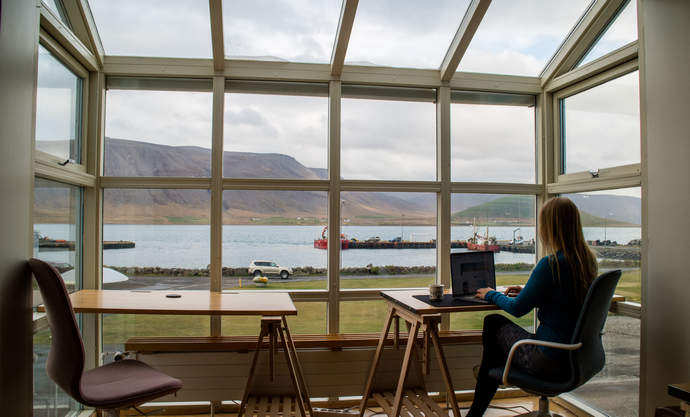
Did you know that working from home can both positively and negatively affect CO₂ emissions? Not too long ago, working from home was seen as just for freelancers and part-timers. Modern technology made most computer-based work possible to be done from anywhere. But there still seemed to be a lack of trust between employers and employees to get work done while not physically being at a desk in view of other colleagues.
Suddenly, the Covid-19 pandemic reared its ugly head, and everyone was forced to stay at home.
Rather than hurting productivity, businesses around the world began to see that their employees could be just as productive at home as in the office. In lots of cases, even more so. In fact, this ‘new normal’ of working ended up being so successful that many businesses adopted some form of long-term hybrid working system once restrictions had been lifted.
It wasn’t just working systems that benefitted from this revelation – with fewer cars on the road during the lockdown, fossil-based carbon dioxide emissions fell to an all-time low.
But now that we’ve adopted this way of working for some time now, studies are finding that our hybrid working carbon footprint could actually counterbalance the good effects of not going into the office every day. After all, we’re now using a lot more energy at home than we used to.
So if you’re working from home or remotely more often, here are five ways to reduce your carbon footprint even further.
1. Go paperless One of the perks of not being at the office is not having to deal with bulky PowerPoint presentation printouts anymore. Go a step further and swap your paper notebook and desk calendar for free digital apps like Google Keep and Google Calendar. Not only does this help save a few trees, but also makes it easier to access your notes and schedule from anywhere. And they’re easier to share with colleagues, too.
You can also make sure you only print documents out if absolutely necessary. Not only will this save energy and trees, but it’ll also save you a small fortune in printer ink over time.
2. Ease off large email attachments You might not expect emails to affect your ‘remote work carbon footprint’. But unsurprisingly, the internet itself uses a massive amount of energy. The carbon footprint of an email is about 4g of carbon dioxide according to climatecare.org. Add a large attachment to that email, and it shoots up to as much as 50g.
While it might be a big ask to stop sending emails altogether, there are ways to limit the impact your internet and computer usage has on the environment. For example, not hitting ‘Reply all’ unless necessary, using a greener cloud provider to store your files, and dimming your monitor so it uses less energy.
3. Switch to a better energy provider If you’re looking for ways to save energy, why not kill two birds with one stone by switching to a cheaper energy provider too? While changing your habits will make savings in both energy and money, finding a better deal for the energy you use will help with keeping on top of your bills.
While the recent price cap increase saw energy prices soar, there are still some companies like Utility Warehouse that offer consumers the chance to save money. For example, they can save their customers money on energy when they bundle multiple services with them. You can also get a free latest-generation smart meter with them, which lets you keep track of your energy use in near-real time. So you can take steps to adjust your usage and make even more savings.
4. Go literally green with plants Not only do they absorb carbon dioxide and give off oxygen, but office plants are proven to boost productivity, too. So by getting a few for your home office, you’ll be supporting your mental health as well as the environment.
You’ll want to choose your plants wisely as different plants thrive in different environments. Wired’s article gives some handy suggestions for plants that do well indoors.
5. Switch off Putting your TV or computer in sleep or standby mode is convenient, but they still end up using energy while in this state. If you’re not going to use electronics for a while – especially at night – make sure you completely power down and switch them off at the mains.
And even though they may seem obvious, remembering small things like switching lights off in rooms that aren’t being used and only filling the kettle with the amount of water you need for one boil can save a lot in the long run.
The growing population, expansion of the industrial sector, and availability of better infrastructure have led to an increase in demand for electricity across the globe. Developed as well as developing countries are trying to balance economic growth while improving the standard of living, for their citizens. These visionary plans have led to an electricity upsurge. Governments across the globe are trying to explore commercial solar on NRG marketand meet these demands by increasing their power generation capacity while balancing carbon emission to co-exist on planet earth. These goals have led to strong regulations on power usage and have fostered encouragement towards renewable sources such as ‘Commercial Solar Power’.
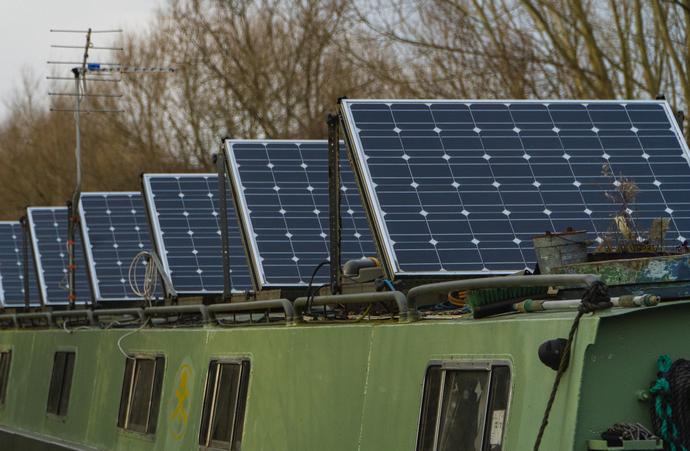
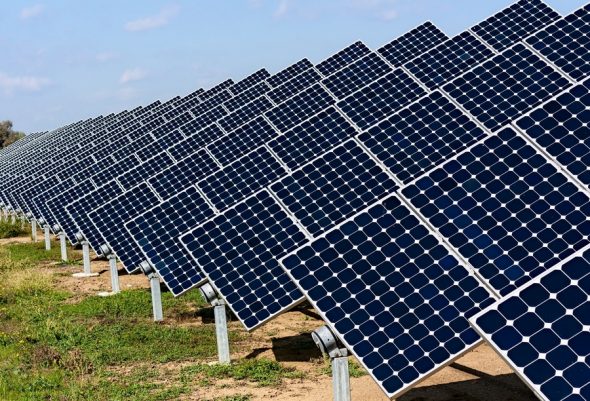
What is commercial solar power? Solar energy is a renewable source of power with the ability to meet the challenges of the new world. Commercial solar power is an installation of industrial size solar panels for extensive self-consumption of electricity. Basis the technology available, commercial solar power is divided into two major segments, Solar Photovoltaic and Concentrated Solar Power. In 2019, Solar Photovoltaic witnessed a dominant market share with a total of 116.9 GW globally with a growth of 103.7 GW recorded in the previous year. On the other hand, the aggregated capacity of concentrated solar power was 6.2 GW with more than 600 MG capacity recorded online.
How do they work? Commercial solar power is collected energy from the sun, made possible by industrial-size rooftop installations made of layers of silicon, phosphorous, and borons laid in a grid pattern. These panels have a lifespan of 15-20 years with no to little maintenance and can support an establishment, both in the day and at night. Governments across the globe have launched many initiatives in lowering dependencies on coal and other fossil fuels. To support this initiative, governments in China, Japan, the US, and EU countries have stringent feed-in tariffs, investment tax credits, net metering, and capital subsidies tosee how you can save with commercial solar.
Impact of Covid-19 on the commercial solar power market The Covid-19 pandemic has disrupted supply chains, delayed deliverables, and created a massive shortage of labor, be it human or in terms of energy. This lead to a fall in the demand for electricity and supporting equipment. A developing country like India that imports 80% of its solar cells and equipment from China witnessed a fall of 1% in demand for electricity nationwide due to lockdown and withdrawal of investments in industries. Despite the repercussions of the pandemic, the global solar power market at USD 163.7 BN is predicted to reach USD 194.75 BN by 2027.
The Future of Commercial Solar Power APAC is anticipated to lead the growth of the commercial solar market with China leading solar projects at a total capacity of 30.1 GW. EU is second with its installations at 16.7 GW which is 104% higher than the year before. It has been observed that the application of Commercial Solar Power is higher in end-use industries such as utility, residential and non-residential. Therefore, governments across the world are encouraging their resident industry giants to adopt more utility application-based solar sources. Some of the top global leaders to check out the new commercial solar marketplace are Urja Global Limited (India), Canadian Solar Inc (Canada), BrightSource Energy (US), and Trina Solar (China).
Industries and governments across the planet have realized the impact of using fossil and non-renewable energy sources. Commercial solar power is the cleanest and more abundantly available source of energy that can efficiently support our livelihood whilst positively impacting the planet leading to its strong demands for a better future across the globe.
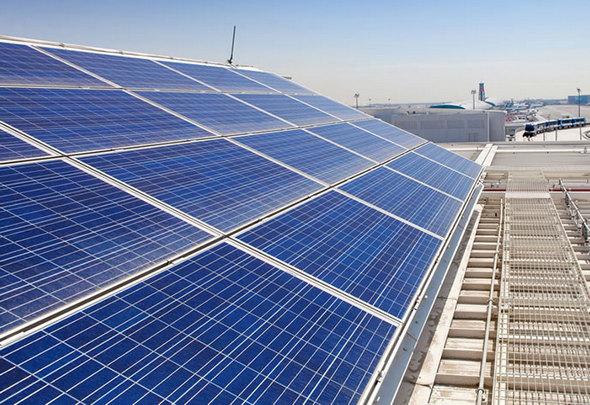
Dubai Airports and Etihad Energy Services today announced the successful installation of a solar energy system comprising 15,000 photovoltaic panels at Dubai International’s Terminal 2 – the largest at any airport in the region. With a capacity of 5MWp, the solar project will generate 7,483,500 kWh energy annually for Dubai Airports, resulting in savings worth AED3.3 million.
The project will reduce existing Terminal 2 load by approximately 29 percent, while also slashing annual CO2 emissions by 3,243 metric tonnes, which is equivalent to 53,617 tree seedlings grown for 10 years or 688 passenger vehicles driven for one year.
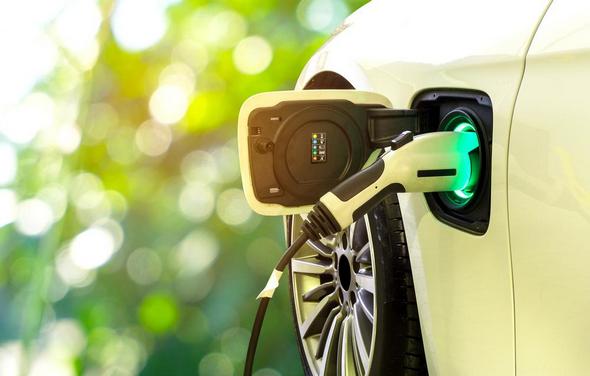
With rising concerns on the use of plastic and the burning of fossil fuels resulting in climate change, many drivers across the globe are investing in environmentally friendly cars. Back in the late 1990s, Toyota released the first mass-produced hybrid car, the Toyota Prius. Since then, almost every big-name car manufacturer has one line of hybrid or electric cars to choose from. As technology continues to develop, new innovations are being made to make electric and hybrid cars the norm. If you want to take action and make our world a little greener, take a look at four of the greenest cars available today.
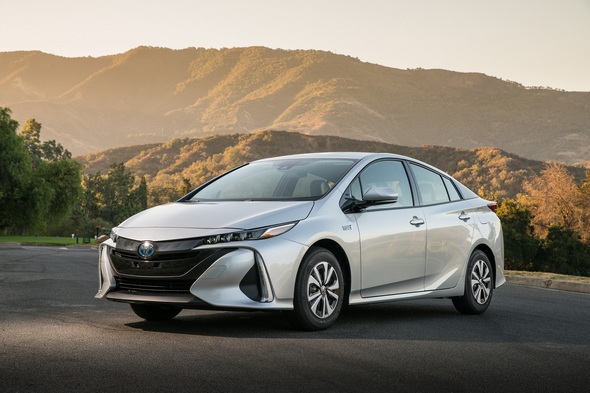
1. 2019 Toyota Prius
Being the first mass-produced hybrid car, it’s only right to keep the Toyota Prius on our list. The 2019 Toyota Prius Prime continues to make driving greener with a 640-mile total range with 54 miles per gallon. With high fuel efficiency and tax incentives, getting into this car is cheaper than ever. You can even get available electronic all-wheel-drive with 50 miles per gallon—the highest mpg of any vehicle that has electronic AWD. Other specs include:
– Driver and front passenger Advanced Airbag System
– Toyota Safety Sense (TSS) Pre-Collision System
– Backup Camera Display
– Engine immobilizer
– 1.8-Liter, 4-cylinder Aluminum DOHC 16-Valve with Variable Valve Timing with intelligence (VVT-i)
If you want to make your car even greener, you can take some matters in your own hands. Keep a tire pressure gauge in your glove compartment as under-inflated tires make your engine work harder and burn more fuel. You should also remove any unnecessary weight, such as heavy luggage, as more weight also requires your engine to work harder. Finally, schedule regular maintenance tune-ups with oil changes, which is around once every twelve months for most Prius models.
2. Mercedes-Benz GLC 350e 4MATIC SUV
If you’re looking for a luxury hybrid car that blends performance with innovative green technology, the Mercedes-Benz GLC 350e 4MATIC SUV is the way to go. This Mercedes can not only rush from 0 to 60 in 6.2 seconds, but it can also return to 56 miles per gallon. With its EQ Power gasoline-electric plug-in hybrid powertrain and 2.0L inline-4 turbo engine, this GLC is a force to be reckoned with.
Before taking the plunge and investing in a car like this, you can always schedule a test drive at a Mercedes dealership near Houston or a dealership near Bangor, to see if this is the green car for you. No matter where you live, see why these features are worth investing in:
– Mercedes in-car WiFi
– Active Distance Assist and Active Blind Spot Assist
– Smartphone integration
– Active LED headlamps
– Active Parking Assist
– COMAND navigation with 8.4-inch screen
Having a luxury car doesn’t mean you can’t be environmentally conscious. Mercedes-Benz and other luxury car brand manufacturers are stepping up to the plate and creating cars with intuitive technology to make our world a little bit greener.
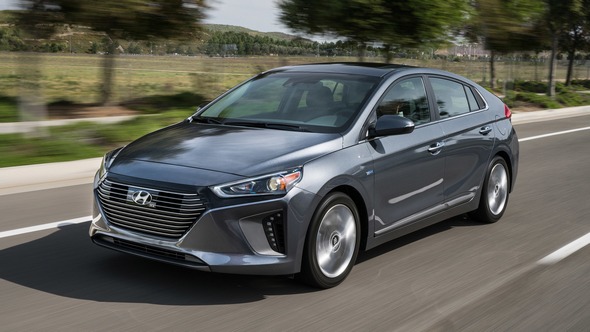
3. Hyundai Ioniq Hybrid
With a clean aerodynamic shape and advanced technology, the 2019 Hyundai Ioniq Hybrid is another top contender for the greenest car this year. With 58 MPG combined, and 57 city and 59 highway MPG, you can certainly go the distance in this sleek hybrid. Or, you can opt for the Ioniq electric, so you never have to stop for gas again. And, the Ionic plug-in hybrid blends the best of both worlds with a mile range up to 630 miles with EV/gas combined. Take a look at what else the Hyundai Ioniq has up its sleeve:
– Available Automatic Emergency Braking with Pedestrian Detection
– Available Lane Keep Assist
– Apple CarPlay and Android Auto
– Wireless device charging
– Proximity key
– Available Integrated Memory System
Dubbed as the most fuel-efficient car in America, the Hyundai Ioniq has made a name for itself in the world of environmentally friendly vehicles. Not only does this car save the planet, but it also saves you money with less spent on gas.
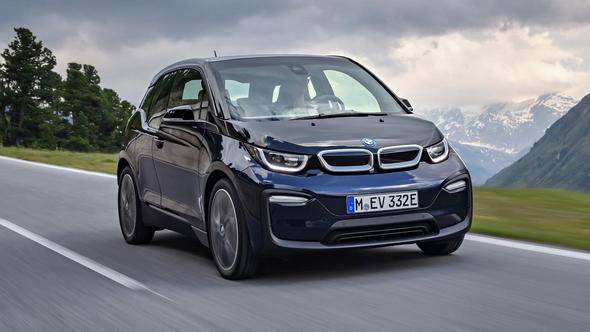
4. BMW i3
Another luxury brand that’s making waves in the eco-friendly car industry. Electrify inspiration in this fashionable sedan anywhere you go with its 153-mile range. Running only on electricity, the BMW i3 can get you from the border of Mexico up to LA without paying a cent on gas (even with traffic!). This revolutionary BMW can fully charge in under 6 hours so you can get from point A to point B in no time. Here’s what else this green sedan offers:
– Eucalyptus wood and olive leaf tanned leather are some natural interior design options
– Easy to charge at home or at public stations
– Receive federal and state tax incentives
– Automatic climate control
– Comfort Access keyless entry
– On-board computer with Check Control
– Bluetooth wireless technology
With over 58,000 charging stations nationwide, be prepared to see more of these BMW i3 sedans driving around town. You’ll also have peace of mind knowing you’ll never run out of power with convenient charging stations nearby, anywhere you go.
Wrapping Up
2019 has been the year of change, and it’s not over yet. With both standard car manufacturers and luxury car brands tapping into the eco-friendly car market, you can expect to see a difference on our planet in years to come. These four green cars only tap the surface of the dozens of car brands and models who make eco-friendly cars. When looking for one of your own, find one that matches your lifestyle and personality, and we thank you for being conscious about keeping our world clean.
Katsushika Ward in Tokyo, Panasonic and Katsushika Full-of-flowers Urban Development Promotion Council have concluded an agreement on technical cooperation concerning the “Flower Merry-Go-Round” three-dimensional (3D) flower bed, which automatically waters followers by using solar electricity. The Flower Merry-Go-Round is a cylindrical 3D flower bed and is equipped with an automatic sprinkler that powers a pump with solar electricity. This technology enables to maintain and manage a flower bed at low costs. The flower bed has a 12W solar panel on its top and a programmable timer for adjusting the watering time in accordance with season and plant. The capacity of the water tank is 200L. The flower bed is developed mainly by Katsushika Full-of-flowers Urban Development Promotion Council along with local companies,
For the flower bed, 104 flower pots (13 rows x 8) can be installed, and sunlight can be evenly applied by turning the flower pots by hand (they can be turned by 360°). The height and diameter of the pot are 1,880 and 900mm, respectively. Panasonic’s mist generator will be used to the Flower Merry-Go-Round as a cooling measure so that people can stay in public spaces with comfort in summer. The power supply of the mist generator is not powered from the solar panel of the Flower Merry-Go-Round. Katsushika Ward aims to install the flower bed at the sites of the 2020 Tokyo Olympic/Paralympic Games.
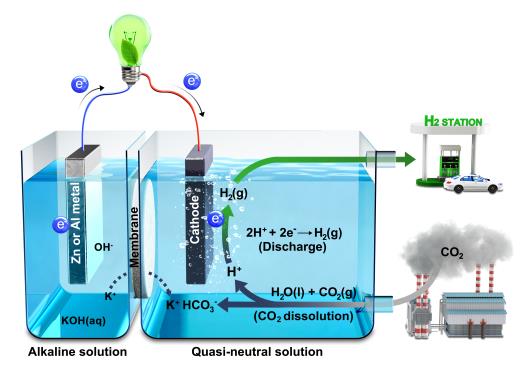
A group of South Korean researchers on Tuesday said they have developed a simple and efficient process to make clean energy from carbon dioxide (CO2), which is cited as a major cause of global warming.
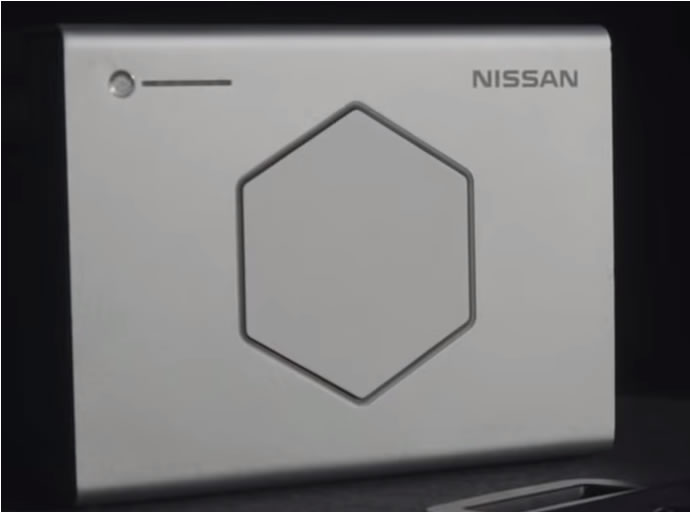
Nissan Energy and OPUS Campers have collaborated on a smart camping concept that uses second-life Nissan electric vehicle batteries to deliver up to a week’s worth of remote power for “off-grid” adventures. The Nissan x OPUS concept integrates the recently unveiled Nissan Energy ROAM, a portable, all-in-one, weatherproof power pack harnessing Nissan’s EV battery technology for convenient, emission-free and silent power on the go.
In 2014, India’s solar power generation capacity was 3,000 megawatts (MW). In less than three years, this figure has risen three-fold and India now boasts of an installed capacity to churn out 10,000 MW of solar energy.
Two ingenious Indian brothers, Arun and Anoop George, decided to ditch conventionality and embrace atypicality – On a micro level to power homes with sustainable energy, and on a macro level to achieve their goal of eliminating ‘energy poverty’. Goodbye rooftop solar panels, hello wind power! In their start-up called Avant Garde Innovations, these two brothers have begun working on leveraging wind energy to generate power, resulting in the development of a ceiling-fan-sized, residential wind turbine that they aim to launch in the second quarter of 2017. The turbine is expected to be priced at approximately USD 750.
Subject to implementation of the plans announced in India’s 2017 Union Budget, pretty much all railway stations in the country will soon be powered by solar.
In the Union Budget speech made on February 01, 2017 by India’s Finance Minister, Arun Jaitley, it was announced that the 7,000 railway stations will run on solar power very soon, across India. This is in line with the Indian Railways’ mission to implement solar power capacity to the tune of 1,000 megawatts (MW).